The microwave is a kitchen marvel that has taken the ease of home cooking to new heights. It is a fast and efficient way to heat up leftovers, cook frozen dinners, or make popcorn. But how exactly does this master cooking appliance work? This article explains the science behind each of the different cooking modes available on a microwave oven, demystifying the mystery of how your food gets cooked so quickly and evenly.
The basic principle of a microwave oven is to heat up your food using electromagnetic radiation, rather than the conventional electric or gas heating that you’d find in an ordinary oven. The electromagnetic waves (called microwaves) travel through the food from top to bottom and are absorbed by the particles of your meal, according to Aswathi Soni, a food scientist at New Zealand-based research institute AgResearch.
Microwave radiation is one of several forms of electromagnetic energy that include radio waves, visible light, infrared waves, ultraviolet radiation, and X-rays. It has a very short wavelength and is attracted to molecules in your food, which it heats rapidly from the inside.
While it may seem like this radiation could cause cancer, there is no evidence that microwaves give you cancer or make your food radioactive. The type of electromagnetic radiation used in microwaves is called non-ionizing, which moves atoms within molecules but doesn’t remove or add electrons to them.
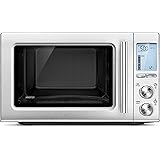
Breville BMO850BSS Smooth Wave Countertop Microwave Oven, Brushed Stainless Steel
$399.95 (as of January 14, 2026 19:13 GMT +00:00 - More infoProduct prices and availability are accurate as of the date/time indicated and are subject to change. Any price and availability information displayed on [relevant Amazon Site(s), as applicable] at the time of purchase will apply to the purchase of this product.)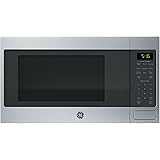
GE Countertop Microwave Oven, 1,150-watt Capacity, 1.6 Cubic Ft., 8 Auto Setting Cooking Settings, Child-Lock Technology, Kitchen Essentials for the Countertop, Dorm Room or Apartment, Stainless Steel
$199.99 (as of January 14, 2026 19:13 GMT +00:00 - More infoProduct prices and availability are accurate as of the date/time indicated and are subject to change. Any price and availability information displayed on [relevant Amazon Site(s), as applicable] at the time of purchase will apply to the purchase of this product.)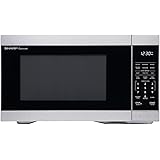
SHARP Countertop Microwave Oven with Removable 12.4" Carousel Turntable, 1000 Watt, 1.1 Cubic Feet, Stainless Steel
$179.97 (as of January 14, 2026 19:13 GMT +00:00 - More infoProduct prices and availability are accurate as of the date/time indicated and are subject to change. Any price and availability information displayed on [relevant Amazon Site(s), as applicable] at the time of purchase will apply to the purchase of this product.)
Chefman Countertop Microwave Oven 0.9 Cu. Ft. Digital Stainless Steel Microwave 900 Watt with 6 Presets, Eco Mode, Mute Option, Memory Function, Child Safety Lock, Kitchen, Home, Dorm Essentials
$89.99 (as of January 14, 2026 19:13 GMT +00:00 - More infoProduct prices and availability are accurate as of the date/time indicated and are subject to change. Any price and availability information displayed on [relevant Amazon Site(s), as applicable] at the time of purchase will apply to the purchase of this product.)
Toshiba Air Fryer Combo 4-in-1 Countertop Microwave Oven, Smart Sensor, Convection, Mute Function, Position Memory 13.6" Turntable, 1.5 Cu Ft, 1000W, Black, ML-EC42P(BS)
$229.99 (as of January 14, 2026 19:13 GMT +00:00 - More infoProduct prices and availability are accurate as of the date/time indicated and are subject to change. Any price and availability information displayed on [relevant Amazon Site(s), as applicable] at the time of purchase will apply to the purchase of this product.)
Farberware 0.7 Cu. Ft. Countertop Microwave Oven – 700 Watts Power, Auto Cook Settings, Defrost, Easy Clean and Child Safety Lock - Black
$69.99 (as of January 14, 2026 19:13 GMT +00:00 - More infoProduct prices and availability are accurate as of the date/time indicated and are subject to change. Any price and availability information displayed on [relevant Amazon Site(s), as applicable] at the time of purchase will apply to the purchase of this product.)
COMMERCIAL CHEF 0.7 Cubic Foot Microwave with 10 Power Levels, Small Microwave with Push Button, 700W Countertop up to 99 Minute Timer and Digital Display, Stainless Steel
$70.76 (as of January 14, 2026 19:13 GMT +00:00 - More infoProduct prices and availability are accurate as of the date/time indicated and are subject to change. Any price and availability information displayed on [relevant Amazon Site(s), as applicable] at the time of purchase will apply to the purchase of this product.)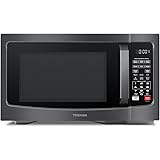
TOSHIBA EM131A5C-BS Countertop Microwave Ovens 1.2 Cu Ft, 12.4" Removable Turntable Smart Humidity Sensor 12 Auto Menus Mute Function ECO Mode Easy Clean Interior Black Color 1000W
$133.98 (as of January 14, 2026 19:13 GMT +00:00 - More infoProduct prices and availability are accurate as of the date/time indicated and are subject to change. Any price and availability information displayed on [relevant Amazon Site(s), as applicable] at the time of purchase will apply to the purchase of this product.)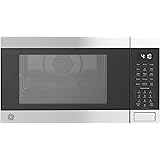
GE GCST10A1WSS 1.0 Cu Ft Convection Microwave Oven, 1050W Countertop Air Fry Microwave with Broil & Crisper Pan, Compact Stainless Steel Design
$199.99 (as of January 14, 2026 19:13 GMT +00:00 - More infoProduct prices and availability are accurate as of the date/time indicated and are subject to change. Any price and availability information displayed on [relevant Amazon Site(s), as applicable] at the time of purchase will apply to the purchase of this product.)