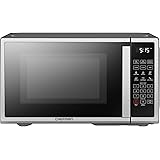
If you’re wondering why microwaves are so ubiquitous in our modern kitchens, the answer lies in their convenience and energy efficiency. They also preserve the nutrients of your food and are very versatile, allowing you to heat things up from frozen dinners to steaming veggies. They don’t retain heat like conventional ovens, so they use less power to cook your food.
Microwaves are electromagnetic radiation, part of the radio frequency portion of the electromagnetic spectrum, discovered alongside radio waves in the late 1800s. They are absorbed by water and fat in food (and other materials such as plastics), which then generate heat to make your meal cook faster than traditional ovens. They can even rehydrate and defrost foods that you’d otherwise have to wait an inordinate amount of time for with a conventional oven.
When engineers at Bell Labs were working on microwave equipment for satellite communication and radio astronomy experiments, Arno Penzias and Robert Woodrow Wilson accidentally discovered that a microwave signal was coming from all directions in space, without much variation in intensity. They dubbed this cosmic microwave background radiation, or CMB, and shared the 1978 Nobel Prize in Physics for their discovery. Today, you’ll find microwaves in many forms of modern technology, including point-to-point wireless communications, wireless networks, radar, satellite and spacecraft communication systems, medical diathermy and cancer treatment, remote sensing, and industrial heating. They’re even used in collision avoidance systems and garage door openers. But despite their utility, microwaves are not exactly loved by everyone. In fact, some chefs have even portrayed them as singlehandedly dragging the art of cooking into the gutter.
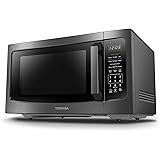
TOSHIBA ML-EM45P(BS) Countertop Microwave Oven with Smart Sensor and 13.6" Removable Position Memory Turntable, Sound On/Off Function, 1200W, 1.6 Cu.ft, Black Stainless Steel
$172.99 (as of January 14, 2026 19:13 GMT +00:00 - More infoProduct prices and availability are accurate as of the date/time indicated and are subject to change. Any price and availability information displayed on [relevant Amazon Site(s), as applicable] at the time of purchase will apply to the purchase of this product.)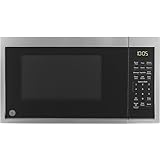
GE Countertop Microwave Oven, Compact 0.9 Cubic Ft., 900-watt Capacity, 7 Auto Cooking Settings, Child-Lock Technology, Kitchen Essentials for the Countertop, Dorm Room or Apartment, Stainless Steel
$135.00 (as of January 14, 2026 19:13 GMT +00:00 - More infoProduct prices and availability are accurate as of the date/time indicated and are subject to change. Any price and availability information displayed on [relevant Amazon Site(s), as applicable] at the time of purchase will apply to the purchase of this product.)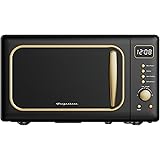
FRIGIDAIRE EMW788RETRO 0.7 cu. ft. Retro Microwave, Black-Gold
$74.98 (as of January 14, 2026 19:13 GMT +00:00 - More infoProduct prices and availability are accurate as of the date/time indicated and are subject to change. Any price and availability information displayed on [relevant Amazon Site(s), as applicable] at the time of purchase will apply to the purchase of this product.)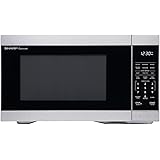
SHARP Countertop Microwave Oven with Removable 12.4" Carousel Turntable, 1000 Watt, 1.1 Cubic Feet, Stainless Steel
$179.97 (as of January 14, 2026 19:13 GMT +00:00 - More infoProduct prices and availability are accurate as of the date/time indicated and are subject to change. Any price and availability information displayed on [relevant Amazon Site(s), as applicable] at the time of purchase will apply to the purchase of this product.)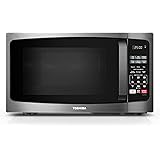
TOSHIBA ML-EM09PA(BS) Small Microwave Oven with 6 Auto Menus, Mute Function & Child Lock, LED Lighting, Perfect for Apartment, 0.9 Cu Ft, 10.6 Inch Removable Turntable, 900W, Black Stainless Steel
$103.92 (as of January 14, 2026 19:13 GMT +00:00 - More infoProduct prices and availability are accurate as of the date/time indicated and are subject to change. Any price and availability information displayed on [relevant Amazon Site(s), as applicable] at the time of purchase will apply to the purchase of this product.)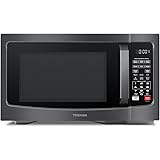
TOSHIBA EM131A5C-BS Countertop Microwave Ovens 1.2 Cu Ft, 12.4" Removable Turntable Smart Humidity Sensor 12 Auto Menus Mute Function ECO Mode Easy Clean Interior Black Color 1000W
$133.98 (as of January 14, 2026 19:13 GMT +00:00 - More infoProduct prices and availability are accurate as of the date/time indicated and are subject to change. Any price and availability information displayed on [relevant Amazon Site(s), as applicable] at the time of purchase will apply to the purchase of this product.)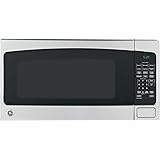
GE Compact Countertop Microwave Oven, 0.7 Cubic Ft., 700-watt Capacity, 6 Auto Cooking Settings, Child-Lock Technology, Dorm Room or Apartment, Stainless Steel
$109.00 (as of January 14, 2026 19:13 GMT +00:00 - More infoProduct prices and availability are accurate as of the date/time indicated and are subject to change. Any price and availability information displayed on [relevant Amazon Site(s), as applicable] at the time of purchase will apply to the purchase of this product.)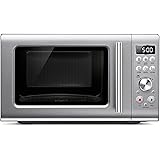
Breville BMO650SIL Compact Wave Soft Close Countertop Microwave Oven, Silver
$249.95 (as of January 14, 2026 19:13 GMT +00:00 - More infoProduct prices and availability are accurate as of the date/time indicated and are subject to change. Any price and availability information displayed on [relevant Amazon Site(s), as applicable] at the time of purchase will apply to the purchase of this product.)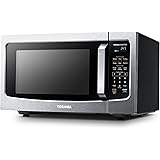
TOSHIBA ML-EM45PIT(SS) Countertop Microwave Oven with Inverter Technology, Kitchen Essentials, Smart Sensor, Auto Defrost, 1.6 Cu.ft, 13.6" Removable Turntable, 33lb.&1250W, Stainless Steel
$179.91 (as of January 14, 2026 19:13 GMT +00:00 - More infoProduct prices and availability are accurate as of the date/time indicated and are subject to change. Any price and availability information displayed on [relevant Amazon Site(s), as applicable] at the time of purchase will apply to the purchase of this product.)