The microwave oven is a kitchen staple: it speeds up food preparation, saves energy, and helps preserve nutrients. Its convenience makes it easy to reheat leftovers and prepare meals from scratch. It also provides a safe and quick alternative to boiling water for steaming vegetables, which can reduce the risk of over-cooking.
Microwaves are electromagnetic waves in the radio frequency portion of the electromagnetic spectrum (as opposed to radio waves in the long-distance radio transmission portion). Physicist Heinrich Hertz first discovered them in the late 1800s, but they weren’t practical until nearly two decades later.
Scientists were able to exploit the unique properties of microwave radiation by creating generators that produce and amplified them. The vacuum-tube device called the klystron and the magnetron are widely used, both for microwave generation and for amplifying microwave signals. Both are designed to accelerate electrons into a high frequency and then transmit them as microwaves through oscillating cavities.
When microwave radiation hits food, it twists the water molecules inside them back and forth. A single water molecule looks like Mickey Mouse’s head, with positively charged oxygen and negatively charged hydrogen atoms at opposite ends of the molecule. The microwaves rotate these atoms at 2.5 billion times per second, which creates friction and heat.
As the molecules in the food absorb this energy, they start to heat up. This causes the food to heat up, and the air around it doesn’t warm up much as a result (which makes the oven so quiet). The microwave ovens you use in your home typically have a turntable that spins the food for even heating. The same principle is employed in industrial microwave systems.
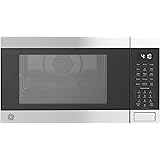
GE GCST10A1WSS 1.0 Cu Ft Convection Microwave Oven, 1050W Countertop Air Fry Microwave with Broil & Crisper Pan, Compact Stainless Steel Design
$199.99 (as of January 14, 2026 19:13 GMT +00:00 - More infoProduct prices and availability are accurate as of the date/time indicated and are subject to change. Any price and availability information displayed on [relevant Amazon Site(s), as applicable] at the time of purchase will apply to the purchase of this product.)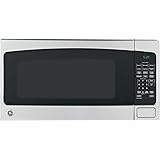
GE Compact Countertop Microwave Oven, 0.7 Cubic Ft., 700-watt Capacity, 6 Auto Cooking Settings, Child-Lock Technology, Dorm Room or Apartment, Stainless Steel
$109.00 (as of January 14, 2026 19:13 GMT +00:00 - More infoProduct prices and availability are accurate as of the date/time indicated and are subject to change. Any price and availability information displayed on [relevant Amazon Site(s), as applicable] at the time of purchase will apply to the purchase of this product.)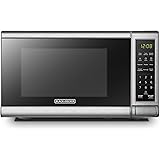
BLACK+DECKER EM720CB7 Digital Microwave Oven with Turntable Push-Button Door, Child Safety Lock, 700W, Stainless Steel, 0.7 Cu.ft
$79.99 (as of January 14, 2026 19:13 GMT +00:00 - More infoProduct prices and availability are accurate as of the date/time indicated and are subject to change. Any price and availability information displayed on [relevant Amazon Site(s), as applicable] at the time of purchase will apply to the purchase of this product.)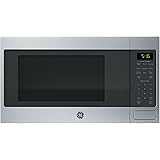
GE Countertop Microwave Oven, 1,150-watt Capacity, 1.6 Cubic Ft., 8 Auto Setting Cooking Settings, Child-Lock Technology, Kitchen Essentials for the Countertop, Dorm Room or Apartment, Stainless Steel
$199.99 (as of January 14, 2026 19:13 GMT +00:00 - More infoProduct prices and availability are accurate as of the date/time indicated and are subject to change. Any price and availability information displayed on [relevant Amazon Site(s), as applicable] at the time of purchase will apply to the purchase of this product.)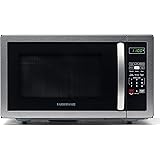
Farberware 1.1 Cu. Ft. Countertop Microwave Oven – 1000 Watts Power, Auto Cook Settings, Defrost, Easy Clean and Child Safety Lock - Stainless
$129.99 (as of January 14, 2026 19:13 GMT +00:00 - More infoProduct prices and availability are accurate as of the date/time indicated and are subject to change. Any price and availability information displayed on [relevant Amazon Site(s), as applicable] at the time of purchase will apply to the purchase of this product.)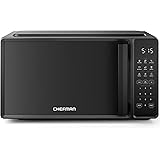
Chefman Countertop Microwave Oven 0.7 Cu. Ft., 700 Watts with 10 Power Levels, 6 Cooking Presets with One-Touch Express Cook, Eco Mode, Child Safety Lock, & Mute Button - Black
$68.96 (as of January 14, 2026 19:13 GMT +00:00 - More infoProduct prices and availability are accurate as of the date/time indicated and are subject to change. Any price and availability information displayed on [relevant Amazon Site(s), as applicable] at the time of purchase will apply to the purchase of this product.)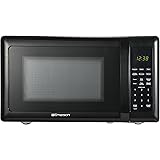
Emerson MW7302B Compact Countertop Microwave Oven with Touch Control, LED Display, 700W, 10 Power Levels, 6 Auto Menus, Glass Turntable and Child Safe Lock, 0.7 Cu., Ft. Black
$69.49 (as of January 14, 2026 19:13 GMT +00:00 - More infoProduct prices and availability are accurate as of the date/time indicated and are subject to change. Any price and availability information displayed on [relevant Amazon Site(s), as applicable] at the time of purchase will apply to the purchase of this product.)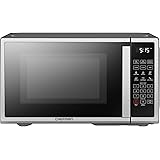
Chefman Countertop Microwave Oven 0.9 Cu. Ft. Digital Stainless Steel Microwave 900 Watt with 6 Presets, Eco Mode, Mute Option, Memory Function, Child Safety Lock, Kitchen, Home, Dorm Essentials
$89.99 (as of January 14, 2026 19:13 GMT +00:00 - More infoProduct prices and availability are accurate as of the date/time indicated and are subject to change. Any price and availability information displayed on [relevant Amazon Site(s), as applicable] at the time of purchase will apply to the purchase of this product.)
Chefman Countertop Microwave Oven 1.1 Cu. Ft. Digital Stainless Steel Microwave 1000 Watts with 6 Auto Menus, 10 Power Levels, Eco Mode, Memory, Mute Function, Child Safety Lock, Easy Clean
$119.99 (as of January 14, 2026 19:13 GMT +00:00 - More infoProduct prices and availability are accurate as of the date/time indicated and are subject to change. Any price and availability information displayed on [relevant Amazon Site(s), as applicable] at the time of purchase will apply to the purchase of this product.)